Choosing the right flow meter is not just about measuring flow. It directly affects process accuracy, safety, and operating cost. Rotameters are widely used because they are simple, reliable, and cost-effective, yet they are also frequently misunderstood and incorrectly selected.
This guide is for engineers, technicians, procurement teams, and students who need a clear and practical understanding of rotameters. Whether you are selecting a flow meter for an industrial system, evaluating options for a project, or trying to understand how variable area flow meters work, this article is built to answer those questions directly.
By the end of this guide, you will understand how a rotameter works, the different types available, where it performs best, its limitations, and how to confidently decide if it is the right flow meter for your application.
Key Takeaway
- A rotameter is a variable area flow meter that measures flow by the position of a float inside a vertically mounted tapered tube.
- It works best for steady, low to medium flow rates of liquids and gases where simplicity and visual indication are preferred.
- Rotameters are easy to install and maintain, but they are less accurate than many modern digital flow meters and must be installed vertically to work correctly.
- Choosing the right rotameter depends on fluid type, flow range, pressure, temperature, and accuracy needs, not just pipe size.
- Rotameters are ideal for monitoring and control, but not for applications requiring high precision or automated data output.
What is a Rotameter?
A rotameter is a variable area flow meter used to measure the flow rate of liquids or gases. It works using a simple mechanical principle and provides a direct visual reading of flow.
The device consists of a vertically installed tapered tube and a float inside it. Fluid enters from the bottom of the tube and flows upward. As the flow increases, it pushes the float higher. As the flow decreases, the float drops lower.
The float stops moving when two forces balance:
- The upward force from the flowing fluid
- The downward force of gravity acting on the float
The position of the float corresponds to the flow rate, which is read against a graduated scale on the tube.
Rotameters are widely used because they are simple, reliable, and do not require power. They are best suited for applications where flow is steady, and a quick visual indication is sufficient, rather than high-precision or automated measurement.
Step-by-step Working Mechanism
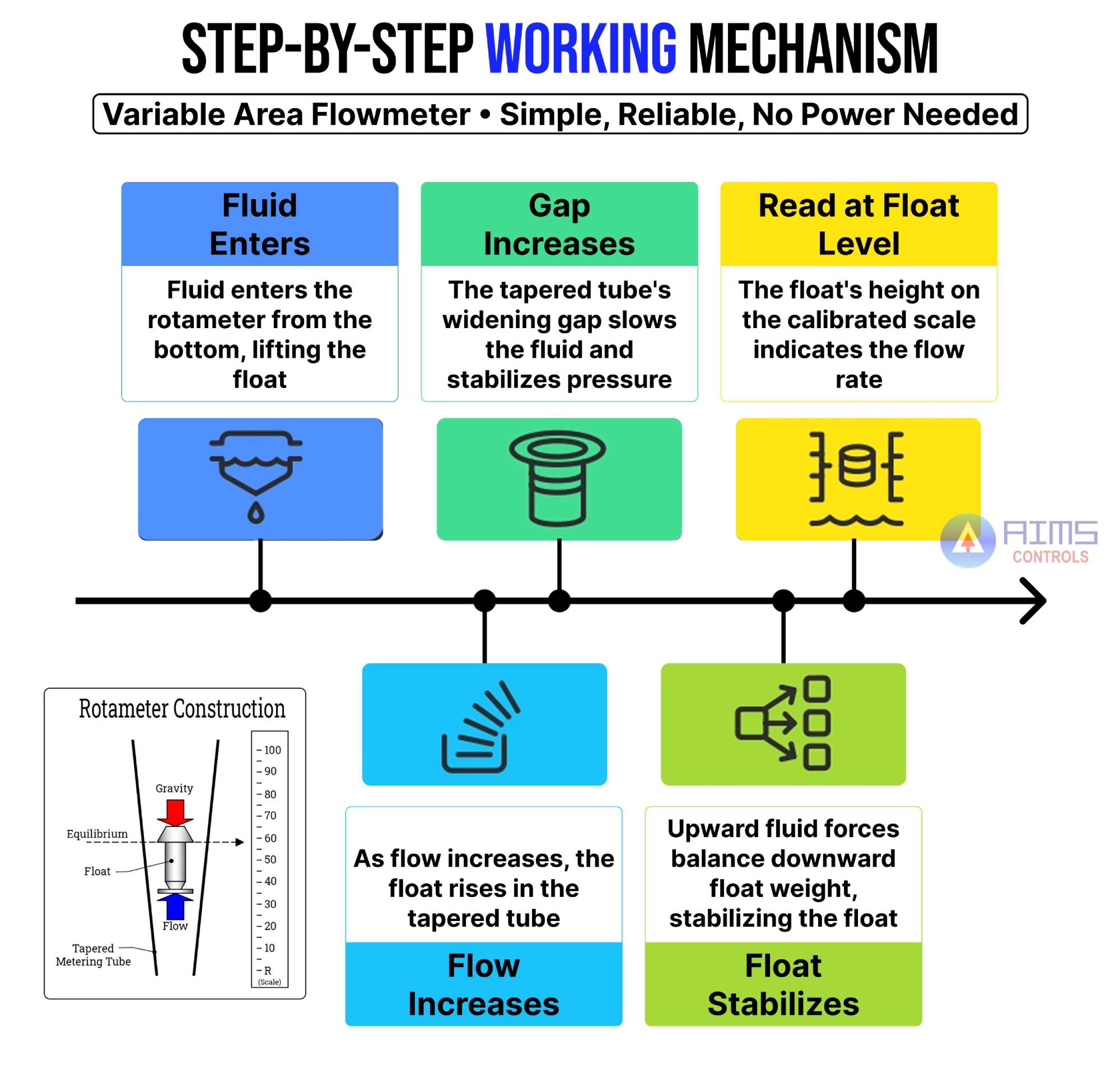
1. Fluid enters from the bottom
The liquid or gas enters the rotameter from the bottom of the tube and flows upward. Bottom entry is critical because it allows the fluid to lift the float against gravity. If flow enters from the top, the rotameter will not function correctly.
2. The float begins to rise
The upward-moving fluid applies force to the float. As the flow rate increases, this force increases and pushes the float upward.
- At low flow rates, the float stays near the bottom.
- At higher flow rates, it rises higher in the tube.
3. The tube’s taper creates a variable flow area
The tube is wider at the top than at the bottom. As the float rises:
- The gap between the float and the tube wall increases
- Fluid velocity around the float decreases
- Pressure stabilizes
This widening flow area is what allows the float to stop rising instead of being pushed out of the tube.
4. Force balance is reached
The float settles at a position where two forces are equal:
- Upward force from fluid flow and pressure
- Downward force caused by the weight of the float (gravity)
When these forces balance, the float remains steady. This position directly corresponds to a specific flow rate.
5. The flow rate is read directly
The flow rate is read at the center or reference edge of the float, depending on float design, against a calibrated scale on the tube.
- No calculations are required.
- No power supply is needed.
- The reading is instantaneous.
Why Rotameters Must be Installed Vertically
Gravity plays a key role in how a rotameter works. If the meter is tilted:
- The gravitational force on the float changes
- The float no longer balances correctly
- Readings become inaccurate
This vertical requirement is one of the most important installation rules and one of the most common reasons rotameters give incorrect readings in the field.
What this means in real applications
- Rotameters are excellent for steady, continuous flow
- They are less suitable for pulsating or rapidly changing flow
- Accuracy depends on proper installation and correct fluid calibration
Understanding this working principle helps engineers quickly recognize when a rotameter is the right tool and when it is not, which is where many selection mistakes happen.
Types of Rotameters
Rotameters are available in different designs to suit varying operating conditions such as pressure, temperature, visibility, and durability. The most commonly used types include glass tube, metal tube, plastic or acrylic, and special-purpose rotameters.
- Glass tube rotameters are used for low-pressure, clean fluid applications where direct visual indication is required.
- Metal tube rotameters are designed for high-pressure, high-temperature, or hazardous industrial environments.
- Plastic or acrylic rotameters are commonly used in water treatment, HVAC, and utility systems.
- Special-purpose rotameters are built for specific needs such as high-purity fluids or very low flow rates.
Each type is designed for specific operating conditions. Detailed explanations of rotameter types and their industry-specific uses are covered in a separate guide focused on Types of Rotameters and Their Industrial Uses.
Rotameter Applications
Rotameters are used in applications where steady flow monitoring, simplicity, and visual indication are more important than extreme accuracy or automation.
They are commonly applied in:
- Water and wastewater treatment
- Chemical and process industries
- Laboratories and research facilities
- HVAC and building services
- Medical and healthcare equipment
Rotameters perform best in controlled environments with stable flow conditions. They are less suitable for pulsating flow, high-precision measurement, or fully automated systems.
For detailed guidance on selecting the right rotameter type for a specific industry, refer to the dedicated article on Rotameter Types by Industry.
Advantages of Rotameters
- Simple construction: Rotameters use a float and tapered tube, with no electronics or complex components, which makes them easy to understand and operate.
- Direct visual flow indication: The flow rate is visible at a glance by observing the float position, making them ideal for quick checks during operation or maintenance.
- No external power required: They operate purely on fluid flow and gravity, which makes them suitable for remote locations or systems without reliable power.
- Low pressure drop: The variable area design allows fluid to pass with minimal resistance, helping maintain system efficiency.
- Cost-effective solution: Rotameters are generally cheaper to purchase, install, and maintain compared to many advanced flow meters.
- Wide availability: They are available in many materials and sizes, making them adaptable to different industrial and laboratory needs.
- Reliable for steady flow conditions: When used with stable flow, rotameters provide consistent and repeatable readings.
Limitations of Rotameters
- Lower measurement accuracy: Rotameters are not designed for high-precision measurement and are less accurate than magnetic, ultrasonic, or mass flow meters.
- Strict vertical installation requirement: They must be installed perfectly vertical. Any tilt directly affects the gravity balance and causes incorrect readings.
- Sensitive to flow fluctuations: Pulsating or rapidly changing flow causes float instability, making readings hard to interpret.
- Limited automation capability: Standard rotameters do not provide electronic outputs unless fitted with additional transmitters.
- Fluid-specific calibration: Each rotameter is calibrated for a specific fluid. Using a different fluid without correction leads to inaccurate results.
- Limited high-pressure and high-temperature use: Glass and plastic rotameters have operating limits and may fail under extreme conditions.
What most people miss
- Rotameters are best used as indicators, not precision instruments
- Installation quality matters more than the meter brand
- Many performance issues are caused by incorrect application, not device failure
How to Select the Right Rotameter
Selecting a rotameter is not about choosing a size that fits the pipe. It is about matching the meter to the process conditions, fluid properties, and measurement purpose. Most selection errors happen because one or more of these factors are ignored.
Below is a clear, step-by-step way to select the right rotameter.
1. Identify the fluid type
- Determine whether the fluid is a liquid or a gas
- Check if the fluid is clean, corrosive, viscous, or hazardous
- Confirm chemical compatibility with tube and float materials
Glass and plastic rotameters work well for clean fluids. Metal tube rotameters are required for corrosive, high-pressure, or hazardous fluids.
2. Define the flow range, not just normal flow
- Identify minimum and maximum flow rates
- Select a rotameter where normal flow falls in the middle of the scale
- Avoid sizing the meter at the extreme low or high end
This improves readability and reduces measurement error.
3. Check operating pressure and temperature
- Compare the system pressure with the meter pressure rating
- Verify the maximum and minimum operating temperature
- Consider pressure surges or temperature fluctuations
Glass and plastic rotameters have strict limits. Metal tube rotameters are preferred for high-pressure or high-temperature systems.
4. Consider required accuracy
- Decide whether the meter is for indication or control
- Understand that rotameters offer moderate accuracy
- Avoid rotameters for critical billing or custody transfer
If high accuracy is required, another flow meter type may be more suitable.
5. Confirm installation orientation and space
- Ensure the rotameter can be installed vertically
- Check the available straight pipe length
- Avoid locations with vibration or unstable mounting
Improper installation is one of the most common causes of incorrect readings.
6. Account for fluid density and calibration
- Rotameters are calibrated for specific fluids
- Density changes affect float position
- Gas rotameters are sensitive to pressure and temperature changes
If the operating fluid differs from the calibration fluid, correction factors or custom calibration may be required.
7. Decide on output and monitoring needs
- Determine if visual indication is sufficient
- Check if alarms or remote monitoring are required
- Consider transmitters if automation is needed
Standard rotameters are visual devices unless fitted with additional accessories.
What most people get wrong during selection
- Choosing based on pipe size instead of flow range
- Ignoring installation orientation
- Using one rotameter for multiple fluids
- Expecting digital-level accuracy from a mechanical device
Rotameter vs Other Flow Meters
| Feature | Rotameter | Magnetic | Turbine | Mass Flow |
| Measures | Volume | Volume | Volume | Mass |
| Fluids | Liquids, gases | Conductive liquids | Clean liquids | Liquids, gases |
| Accuracy | Moderate | High | High | Very high |
| Installation | Vertical only | Any | Straight runs | Flexible |
| Power | Not required | Required | Required | Required |
| Cost | Low | High | Medium | High |
| Best for | Visual monitoring | Automation | Clean flow | Precision control |
Common Mistakes and Misconceptions
Rotameters are simple devices, but they are often used incorrectly. Most problems are caused by a misunderstanding of how they work or where they should be used.
Mistake 1: Installing the rotameter at an angle
Rotameters must be installed vertically. Even a small tilt affects how gravity acts on the float and leads to incorrect readings.
Mistake 2: Choosing based on pipe size
Many users select a rotameter to match the pipe size rather than the flow range. This often results in poor readability and inaccurate measurements.
Mistake 3: Using one rotameter for different fluids
Rotameters are calibrated for specific fluids. Using the same meter for a different liquid or gas without correction causes significant errors.
Mistake 4: Expecting high accuracy
Rotameters are flow indicators, not precision instruments. Expecting billing-level or control-level accuracy leads to unrealistic performance expectations.
Mistake 5: Ignoring pressure and temperature limits
Glass and plastic rotameters have strict operating limits. Exceeding these limits can cause damage, leakage, or failure.
Common misconception: Rotameters are outdated
Rotameters are still widely used because they solve simple flow measurement problems effectively. They are not outdated; they are application-specific. Understanding these mistakes helps avoid incorrect selection, unreliable readings, and unnecessary replacements.
What to Do Next
If you are evaluating a rotameter for an industrial, laboratory, or utility application, the next step is to match the meter to your actual operating conditions, not just flow range or pipe size.
AIMS Controls offers a wide range of rotameters designed for different fluids, pressures, temperatures, and industries, along with technical guidance to help avoid common selection mistakes.
- Explore available flow measurement solutions
• Review product options based on your application needs
• Get expert assistance for sizing, material selection, and calibration
If you need help choosing the right rotameter or have a specific requirement, reach out directly to an AIMS Control Expert. A quick discussion can prevent incorrect selection, downtime, and unnecessary cost.