Different rotameter types are designed for different operating environments, and using the wrong type for an industry is one of the most common causes of flow measurement issues.
This guide focuses specifically on rotameter types and their industrial uses. If you are looking to understand how rotameters work, their advantages, limitations, and selection fundamentals, refer to our complete rotameter guide.
This article is intended for engineers, maintenance teams, and procurement professionals who already understand what a rotameter is, but need clarity on which rotameter type fits which industry and why.
By the end of this guide, you will be able to match rotameter types to real industrial environments and avoid common industry-specific selection mistakes.
Key Takeaway
- Rotameter types are designed for specific pressure, temperature, and safety conditions
- Glass tube rotameters suit clean, low-pressure environments
- Metal tube rotameters are built for harsh and hazardous industries
- Plastic or acrylic rotameters are ideal for utilities and HVAC systems
- Selecting the wrong type for an industry leads to safety risks and reduced service life
Why Different Industries Need Different Rotameter Types
Industrial environments vary widely in pressure, temperature, vibration, and chemical exposure. A rotameter that works well in a laboratory may fail quickly in a chemical plant or oil and gas facility.
Each rotameter type is engineered to solve a specific set of problems:
- Visibility-focused designs prioritize easy flow indication
- Metal constructions prioritize durability and safety
- Plastic designs prioritize cost efficiency and impact resistance
When the rotameter type does not match the industry environment, the result is inaccurate readings, frequent maintenance, shortened service life, or safety risks.
This is why industrial rotameter selection should always consider where and how the meter will be used, not just flow rate.
Main Types of Rotameters Used in Industry
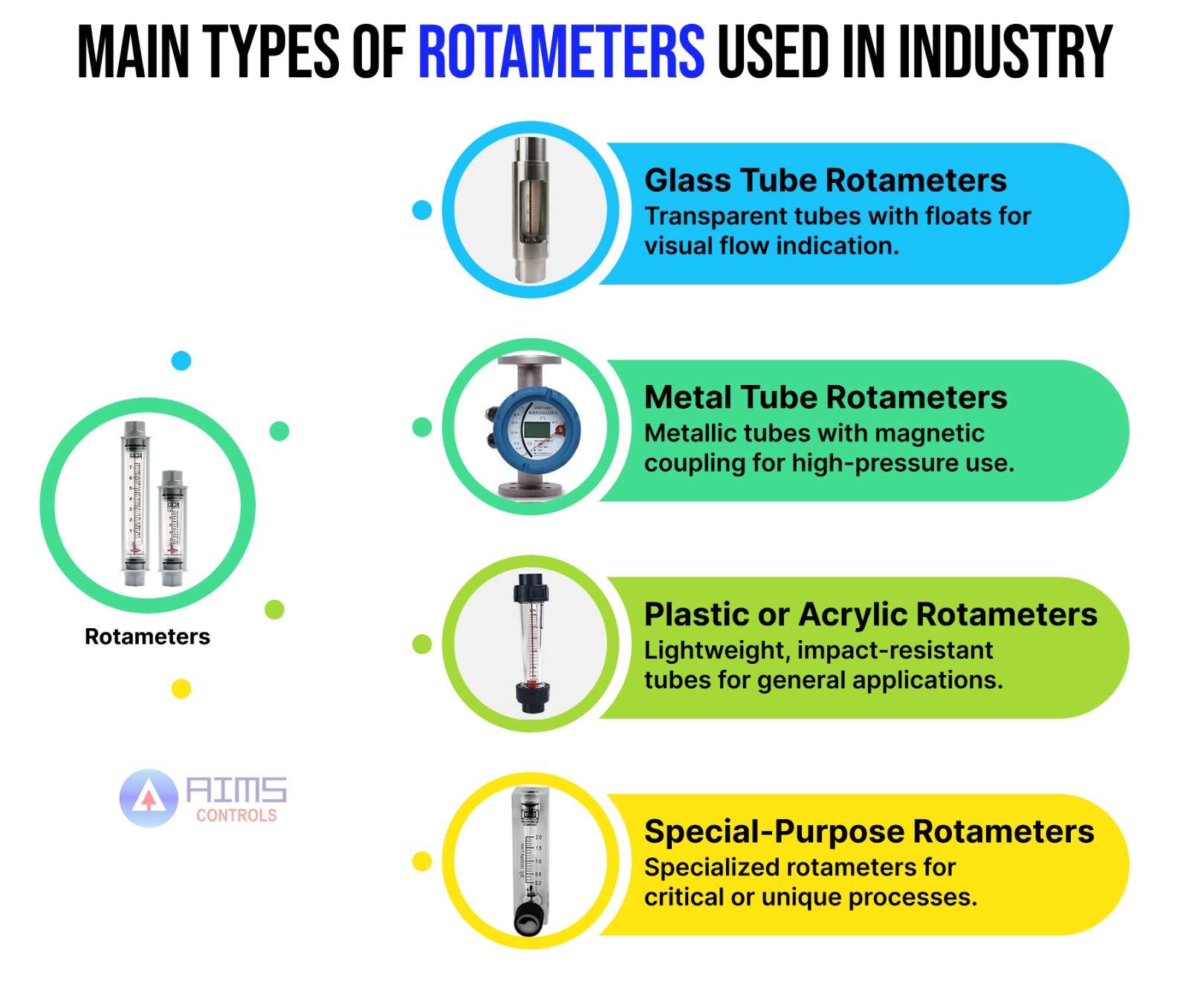
1. Glass Tube Rotameters
Glass tube rotameters use a transparent tapered glass tube with a freely moving float. They are selected for visibility and simplicity rather than ruggedness.
Where they are commonly used
- Laboratories and research facilities
- Pilot plants
- Low-pressure industrial processes
- Clean liquid and gas lines
Why industries use them
- Direct visual flow indication
- Simple installation and maintenance
- Cost-effective for non-critical applications
Where they should be avoided
- High-pressure systems
- Vibrating pipelines
- Hazardous or aggressive chemicals
Glass tube rotameters are best suited for controlled environments where operating conditions are gentle.
2. Metal Tube Rotameters
Metal tube rotameters are designed for demanding industrial environments. The tube is metallic, and float position is indicated using magnetic coupling to an external scale.
Where they are commonly used
- Chemical and petrochemical plants
- Oil and gas facilities
- Power generation systems
- High-pressure gas and steam lines
Why industries use them
- High pressure and temperature resistance
- Suitable for corrosive and hazardous fluids
- Improved safety in industrial environments
Where they should be avoided
- Applications requiring direct visual observation
- Low-cost utility systems where ruggedness is unnecessary
Metal tube rotameters are chosen when safety and durability are more important than visibility.
3. Plastic or Acrylic Rotameters
Plastic rotameters use transparent materials such as acrylic or polycarbonate. They provide a balance between visibility and impact resistance.
Where they are commonly used
- Water treatment plants
- HVAC and building services
- Cooling and flushing lines
- Low-pressure utility applications
Why industries use them
- Lightweight and economical
- More impact-resistant than glass
- Easy visual monitoring
Where they should be avoided
- High-temperature environments
- Aggressive or solvent-based chemicals
- Outdoor installations with high UV exposure
Plastic rotameters are ideal for general-purpose and utility applications.
4. Special-Purpose Rotameters
Some industries require rotameters designed for specialized operating conditions.
Examples include
- High-purity rotameters for pharmaceutical and semiconductor use
- Low-flow rotameters for precise dosing applications
- Custom-calibrated rotameters for specific gases or liquids
These rotameters are typically selected with manufacturer support for critical or specialized processes.
Rotameter Types by Industry
Water and Wastewater Treatment
Best-suited rotameter types
- Plastic or acrylic rotameters
- Metal tube rotameters for pressurized lines
Typical uses
- Chemical dosing
- Filter backwash monitoring
- Utility water flow indication
Chemical and Petrochemical Industry
Best-suited rotameter types
- Metal tube rotameters
- Special-purpose rotameters for corrosive fluids
Typical uses
- Reactant feed lines
- Cooling and flushing systems
- Auxiliary process streams
Oil and Gas Industry
Best-suited rotameter types
- Metal tube rotameters
Typical uses
- Gas flow monitoring
- Instrument air systems
- Process support lines
HVAC and Building Services
Best-suited rotameter types
- Plastic or acrylic rotameters
- Glass tube rotameters in controlled environments
Typical uses
- Chilled water balancing
- Cooling tower flow indication
- Air and gas flow monitoring
Laboratories and Pharmaceutical Facilities
Best-suited rotameter types
- Glass tube rotameters
- Special-purpose high-purity rotameters
Typical uses
- Gas flow control
- Pilot testing
- Research and development setups
Common Selection Mistakes by Industry
- Using glass rotameters in vibrating or high-pressure pipelines
- Selecting plastic rotameters without checking chemical compatibility
- Ignoring pressure rating in gas applications
- Overengineering simple utility systems
- Assuming one rotameter type suits all industries
Most failures occur due to incorrect type selection, not product quality.
FAQs About Rotameter Types
Which rotameter type is best for industrial use
Metal tube rotameters are most suitable for industrial environments due to their strength and safety features.
What is the main difference between glass and metal tube rotameters
Glass tube rotameters focus on visibility, while metal tube rotameters focus on durability and safety.
Can one rotameter type be used across different industries
In most cases, no. Industry conditions vary too widely for a single type to perform reliably everywhere.
Are plastic rotameters safe for chemical applications
Only for mild and compatible chemicals. Aggressive fluids require a metal tube or special-purpose designs.
What to Do Next
If you are selecting a rotameter for an industrial application, confirm that the rotameter type matches your industry conditions, not just the flow range.
AIMS Controls offers a wide range of rotameters for utilities, chemical processing, oil and gas, HVAC, laboratories, and other industrial environments. Their team can help you choose the right rotameter type based on fluid, pressure, temperature, and safety requirements.
- Explore available rotameter solutions
- Compare rotameter types by industry
- Get expert guidance for the correct selection
A short discussion with an application expert can prevent wrong selection, downtime, and unnecessary cost.