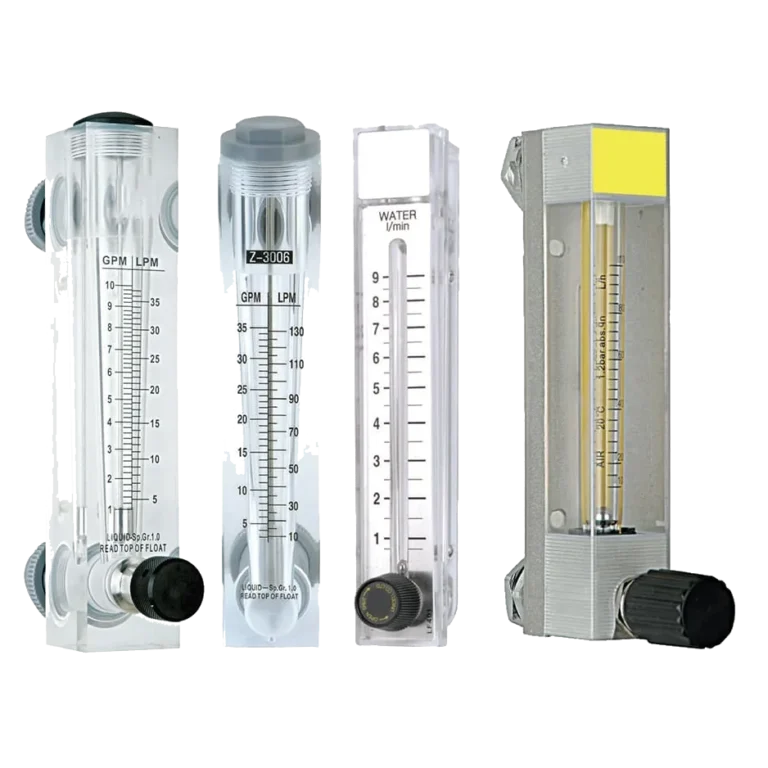
Flow Rotameter Manufacturer/Supplier in Gujarat, India
A flow rotameter is one of the most widely used instruments in industrial flow measurement. Simple in design, easy to read, and cost-effective to maintain, rotameters are trusted across hundreds of industries for measuring the flow rate of liquids and gases in real time.
What is a Flow Rotameter?
A flow rotameter, also known as a variable area flow meter, measures the flow rate of a fluid by allowing it to pass upward through a tapered tube, lifting a float to a height that corresponds directly to the flow rate. The higher the float, the greater the flow.
Unlike electronic meters, rotameters require no external power source, making them ideal for remote installations and hazardous environments.
How Does a Rotameter Work?
The operating principle is straightforward:
- Fluid enters from the bottom of a vertically mounted tapered tube
- The fluid lifts a float inside the tube
- The float rises until the upward force of the fluid equals gravity
- The float stabilizes at a height proportional to the flow rate
- The flow rate is read directly from the graduated scale on the tube
This gravity-based mechanism makes rotameters self-regulating and maintenance-friendly.
Applications of Flow Rotameters
- Water & Wastewater Treatment: chemical dosing and flow monitoring
- Oil & Gas: seal oil, purge gas, and instrument air measurement
- Chemical & Pharmaceutical: reagent and solvent dosing
- Food & Beverage: hygienic flow monitoring systems
- HVAC & Utilities: chilled and cooling water flow balancing
- Laboratories: analytical gas and liquid flow control
- Power Plants: auxiliary fluid and cooling system monitoring
Advantages of Using a Flow Rotameter
- No Power Required: Fully mechanical operation
- Direct Reading: Instant visual flow indication
- Low Pressure Drop: Minimal resistance to flow
- Wide Compatibility: Suitable for liquids, gases, and chemicals
- Easy Maintenance: Simple design with few moving parts
- Cost-Effective: Low purchase and maintenance costs
Frequently Asked Questions
Q: What is the difference between a rotameter and a flow meter?
A rotameter is a type of flow meter, specifically a variable area flow meter. While all rotameters are flow meters, not all flow meters use the same working principle.
Q: Can a rotameter measure gas flow?
Yes, rotameters can measure both gas and liquid flow. Selection depends on fluid properties such as density and viscosity.
Q: Are rotameters accurate?
Typical accuracy ranges from ±1% to ±5% of full scale, depending on design and calibration.
Q: How do I choose the right rotameter?
Consider fluid type, flow range, pressure, temperature, and connection size before selecting a rotameter.
Q: Do rotameters need calibration?
Yes, periodic calibration is recommended, especially for critical measurement applications.
Why Source Your Rotameter from a Specialist Manufacturer?
- Precision factory calibration
- Wide size range from 6mm to 150mm and above
- Material traceability and quality certification
- Custom scale printing for specific fluids
- Fast delivery for standard and custom designs
- Technical support for selection and installation