Diaphragm Seal Manufacturer & Supplier in Gujarat, India
A trusted diaphragm seal manufacturer and supplier provides one of the most important protective accessories in industrial instrumentation. Wherever process media is aggressive, viscous, toxic, high-temperature, or hygienic, a diaphragm seal isolates the pressure instrument completely while accurately transmitting process pressure, ensuring long instrument life, accurate measurement, and safe operation.
What is a Diaphragm Seal?
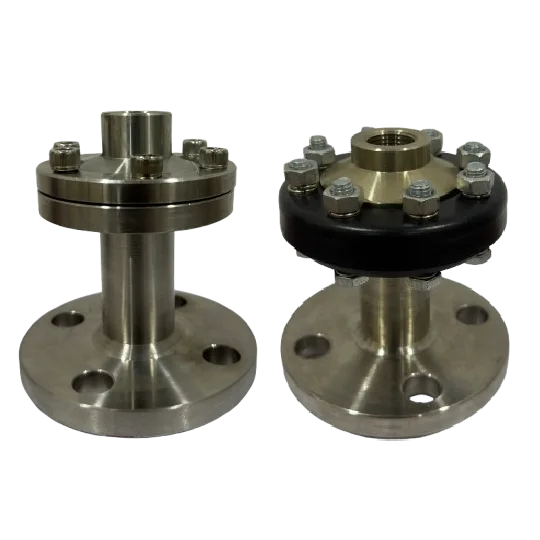
A diaphragm seal, also known as a chemical seal, remote seal, or membrane seal, is a device that isolates a pressure instrument (gauge, switch, or transmitter) from direct contact with the process fluid. A thin, flexible diaphragm separates the process side from the instrument side, with a hydraulic fill fluid filling the space between the diaphragm and the instrument, transmitting pressure accurately without any process fluid entering the instrument.
Diaphragm seals are used when:
- Process fluid is corrosive, toxic, or hazardous and must not contact the instrument
- Process fluid is viscous, crystallizing, or polymerizing, and would block instrument connections
- Process temperature is too high for direct instrument connection
- Application requires hygienic or sterile process connections
- Process fluid contains suspended solids or slurries that clog standard connections
- Instrument requires remote mounting away from the process connection point
How Does a Diaphragm Seal Work?
The operating principle is straightforward and entirely mechanical:
- The diaphragm flexes in response to pressure changes
- The deflection is transmitted through the hydraulic fluid inside the sealed cavity
- The fill fluid pressure acts directly on the pressure instrument sensing element
- The instrument reads and displays or transmits the pressure value
- At no point does the process fluid contact the instrument; complete isolation is maintained
- When pressure drops, the diaphragm returns to its neutral position, ready for the next cycle
The entire system is factory-assembled, filled, and leak-tested as a matched unit, ensuring accurate, reliable, and maintenance-free performance.
Types of Diaphragm Seals
Threaded Diaphragm Seal
The most common and cost-effective design. Connects directly to the process via a male or female threaded connection. Suitable for standard pressure tappings in tanks, vessels, and pipelines where flanged connections are not required.
Flanged Diaphragm Seal
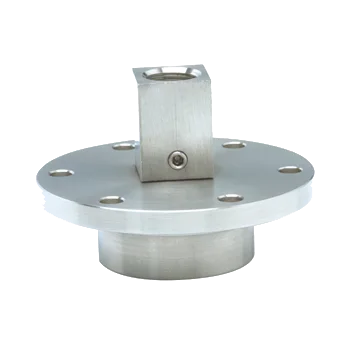
Connects to the process via a raised face or flat face flange. Preferred for higher pressure applications, larger process connections, and installations where threaded connections are not permitted by piping specifications.
Flush / Wafer Diaphragm Seal
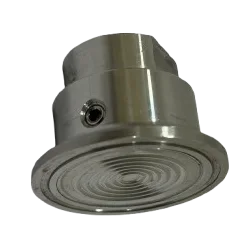
Features a completely flush diaphragm face with no cavities or dead spaces. Essential for hygienic, pharmaceutical, food-grade, and highly viscous applications where product entrapment must be eliminated.
In-Line / Wafer Type Diaphragm Seal
Installed directly in the pipeline between two flanges. The process fluid flows past the diaphragm face, ideal for low-flow, high-viscosity, and sanitary applications where a side-mounted tapping is not practical.
Sanitary / Hygienic Diaphragm Seal
Designed specifically for pharmaceutical, food, and beverage applications. Features a tri-clamp, DIN, or SMS connection with a crevice-free, electropolished diaphragm face that meets FDA, 3-A, and EHEDG hygienic standards.
Capillary / Remote Seal
The diaphragm seal is connected to the instrument via a flexible capillary tube filled with hydraulic fluid. Allows the instrument to be mounted remotely, away from high temperatures, vibration, or inaccessible process locations. Available in single capillary and twin capillary (for DP transmitters) configurations.
Direct Mount Diaphragm Seal
Mounts directly onto the pressure instrument with no capillary. Compact, rigid assembly with minimal fill fluid volume, providing the best dynamic response and temperature compensation characteristics.
High-Temperature Diaphragm Seal
Specially designed for process temperatures exceeding standard fill fluid limits. Features include extended necks, cooling fins, or specialized high-temperature fill fluids to protect the instrument from thermal damage.
Key Features of Quality Diaphragm Seals
- Complete process isolation, the instrument never contacts the process fluid.
- Factory-filled and leak-tested as a matched assembly before dispatch
- Wide diaphragm material range for compatibility with virtually any process fluid
- Flush face designs eliminating dead cavities for hygienic and viscous applications
- Capillary options for remote instrument mounting up to 10 meters from the process
- High-pressure ratings, up to 400 Bar, depending on design and material
- High-temperature versions with extended necks and cooling fins
- Compatible with all instruments, gauges, switches, and transmitters
- Electropolished finish available for pharmaceutical and semiconductor applications
- Full material traceability with MTRs and diaphragm material certificates
- Custom-engineered assemblies for non-standard process conditions
Applications of Diaphragm Seals
Oil & Gas, protection of pressure instruments on crude oil, produced water, H₂S service, and sour gas lines where direct instrument contact is unacceptable.
Chemical & Petrochemical, isolation of instruments from acids, alkalis, solvents, and aggressive organic chemicals in reactors, storage tanks, and process pipelines.
Power Generation, high-temperature steam measurement, boiler drum instrumentation, and condensate system pressure monitoring using capillary seal assemblies.
Pharmaceuticals & Biotechnology, hygienic flush seals on bioreactors, WFI storage, and sterile process vessels meeting FDA, 3-A, and EHEDG requirements.
Food & Beverage, sanitary diaphragm seals on pasteurizers, homogenizers, filling lines, and CIP systems where product purity and cleanability are mandatory.
Pulp & Paper, flushing ring and diaphragm seal combinations on black liquor, white water, and pulp stock lines to prevent clogging and instrument damage.
Mining & Minerals, protection of pressure instruments from abrasive slurries, tailings, and corrosive leach solutions in mineral processing plants.
Semiconductor & Electronics, ultra-high purity diaphragm seals with gold-plated or PTFE diaphragms for aggressive chemical delivery systems in chip fabrication.
Wastewater Treatment, diaphragm seals on sludge, effluent, and chemical dosing line instruments to prevent clogging and corrosion damage.
Frequently Asked Questions (FAQ)
Q: What is the difference between a diaphragm seal and a chemical seal?
They are the same product referred to by different names. Diaphragm seal, chemical seal, remote seal, and membrane seal all describe the same isolation device. The term chemical seal is commonly used in the chemical industry, while diaphragm seal and remote seal are preferred in oil, gas, and general process industries.
Q: Can a diaphragm seal be used with any pressure instrument?
Yes. Diaphragm seals are compatible with pressure gauges, pressure switches, and pressure transmitters from all major manufacturers. The instrument connection is standardized, and the seal assembly is factory-matched to the specific instrument being protected.
Q: Does a diaphragm seal affect measurement accuracy?
A properly selected and factory-filled diaphragm seal has minimal impact on accuracy. However, temperature effects on the fill fluid can introduce small errors, particularly with capillary seals in environments with large ambient temperature variations. Correct fill fluid selection and capillary length minimization reduce this effect.
Q: What is a capillary diaphragm seal used for?
A capillary seal allows the pressure instrument to be mounted remotely, away from the process connection. This is used when the process is at high temperature, in a hazardous or inaccessible location, or when the instrument must be at a convenient reading height away from the process nozzle.
Q: How is a diaphragm seal assembly filled and tested?
The complete assembly, diaphragm seal, fill fluid, capillary (if used), and instrument are filled under vacuum in a controlled factory environment. This ensures no air bubbles remain in the fill fluid, which would cause measurement errors. The filled assembly is then pressure-tested and leak-checked before dispatch.
Q: What is the maximum temperature a diaphragm seal can handle?
Standard assemblies with glycerine fill fluid handle up to +150°C. High-temperature versions with specialized fill fluids and extended cooling necks handle process temperatures up to +400°C. For superheated steam applications, an extended neck or cooling fin design is recommended.
Q: Are PTFE diaphragms suitable for all chemical applications?
PTFE offers excellent universal chemical resistance and is compatible with almost all process fluids, including strong acids, alkalis, and solvents. However, PTFE diaphragms are thicker and less sensitive than metallic diaphragms, making them less suitable for very low-pressure measurement where diaphragm stiffness affects accuracy.
Why Choose a Specialist Diaphragm Seal Manufacturer & Supplier
- Complete range of threaded, flanged, flush, sanitary, capillary, and high-temperature diaphragm seals
- Wide selection of diaphragm materials, SS316L, Hastelloy, Tantalum, PTFE, Titanium, and Monel
- All fill fluid options available: glycerine, silicone, food-grade, high-temperature, and halocarbon.
- Factory vacuum-filled and pressure-tested assemblies with certification before dispatch.
- Compatible with gauges, switches, and transmitters from all major instrument manufacturers
- Full material traceability with mill test certificates and diaphragm material certification
- Hygienic designs compliant with FDA, 3-A, and EHEDG for pharmaceutical and food applications
- NACE MR0175 compliant assemblies for sour service oil and gas applications
- PED-compliant design and manufacture for European pressure equipment regulations
- Custom engineering for non-standard sizes, exotic materials, and special process conditions
- Competitive Indian manufacturing with global quality standards
- Fast delivery from stock on standard assemblies, with short lead times on custom builds