- Product: Pressure Transmitter
- Precision: 0.075% of Span for all ranges
- Turn Down Ratio: 100:1 for all models
- Stability: ±0.15% of URL


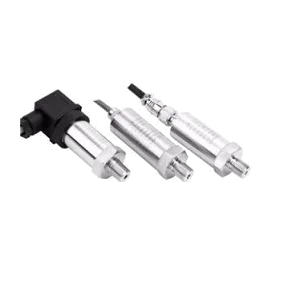
A trusted supplier of precision pressure transmitters, we engineer instruments that convert pressure signals into accurate electrical outputs for real-time monitoring and control across demanding industrial environments. Pressure transmitters are critical infrastructure in hydraulic systems, process automation, HVAC networks, and IoT-enabled smart manufacturing, where continuous pressure data informs automated decisions and ensures operational safety. Our solutions serve petrochemical refineries, power generation plants, water treatment facilities, and OEMs who depend on reliable pressure intelligence to optimize production, prevent equipment failure, and maintain regulatory compliance.
Pressure transmitters are precision sensors designed to measure pressure in a system and convert that measurement into proportional electrical signals (typically 4-20mA, 0-10V DC, or digital output) for transmission to control systems, data loggers, or human-machine interfaces (HMIs). Unlike pressure switches, which provide simple on/off protection, transmitters deliver continuous, accurate pressure data that enables real-time monitoring, diagnostics, and automated response in complex industrial processes.
They function as the “eyes” of modern industrial systems, continuously observing pressure conditions and translating mechanical forces into electronic intelligence that modern automation systems can interpret and act upon instantly.
Pressure transmitters operate through a multi-stage signal conversion process:
Stage 1: Pressure Sensing – A sensitive sensing element, typically a thin diaphragm or strain gauge, is exposed to system pressure through a port or manifold connection. The applied pressure causes the diaphragm to deflect slightly, with the magnitude of deflection proportional to applied pressure.
Stage 2: Signal Transduction – The diaphragm’s deflection is converted into an electrical signal through one of several mechanisms:
Stage 3: Signal Conditioning – Raw electrical signals (often millivolts) are amplified, filtered, and linearized through integrated electronics or external signal conditioners to produce industry-standard output signals.
Stage 4: Output Transmission – The conditioned signal is output as:
Stage 5: System Integration – The output signal is received by PLCs, data acquisition systems, SCADA software, or cloud analytics platforms, where it’s logged, analyzed, and used to trigger automated control actions or alerts.
Measure pressure relative to atmospheric pressure (zero reference = 1 bar at sea level). These transmitters ignore ambient atmospheric fluctuations and are ideal for hydraulic systems, compressed air networks, and general industrial applications where you need to know pressure above normal atmospheric conditions. The most common type in manufacturing facilities and mobile equipment.
Measure pressure relative to a perfect vacuum (zero reference = true vacuum). These transmitters are essential for altitude-dependent applications, vacuum system monitoring, barometric pressure measurement, and aerospace/aviation systems where atmospheric variance cannot be ignored. Commonly used in weather stations, altitude compensation systems, and vacuum pump monitoring.
Measure the pressure difference between two system points, comparing a high-pressure source against a low-pressure reference. Differential transmitters detect filter blockage (indicating maintenance needs), monitor pressure drop across process equipment, measure flow indirectly via orifice plates, and control dual-chamber hydraulic circuits. Critical for predictive maintenance and process efficiency optimization.
Specialized sensors designed to measure pressure from liquid columns in tanks, reservoirs, and open channels. These transmitters account for liquid density and depth to calculate level, making them essential for wastewater treatment plants, tank farm monitoring, dam management, and any application requiring liquid level measurement via hydrostatic pressure. Available with temperature compensation for viscous or temperature-sensitive fluids.
Microprocessor-based transmitters with integrated intelligence, offering advanced diagnostics, remote calibration, multiple output protocols (4-20mA, HART, Modbus, Profibus, Foundation Fieldbus), predictive failure alerts, and cloud connectivity. Smart transmitters enable condition-based maintenance, real-time asset tracking, and seamless integration with Industry 4.0 systems. These are the future of industrial sensing, providing not just pressure data but system health intelligence.
Identify whether you need gauge, absolute, differential, or hydrostatic pressure measurement. Define the minimum and maximum operating pressures, select a transmitter rated 1.3× your maximum operating pressure for a safety margin. Document normal operating pressure (set-point) and expected pressure spikes.
Specify the fluid or gas being measured (hydraulic oil, water, steam, corrosive chemicals). Choose transmitter materials accordingly:
Choose based on your control system:
Evaluate temperature range, humidity, vibration, and electromagnetic interference (EMI):
Q: What is the difference between a pressure transmitter and a pressure transducer?
Technically, “transducer” is the umbrella term for any device that converts pressure into an electrical signal. A “transmitter” is a specialized transducer with signal conditioning built in, outputting standardized industrial signals (4-20mA, 0-10V). For practical purposes in industrial settings, the terms are used interchangeably, though “transmitter” implies a complete, ready-to-install system.
Q: Can I use a gauge pressure transmitter where absolute pressure is needed?
No. Gauge transmitters reference atmospheric pressure and will produce incorrect readings if atmospheric conditions change (altitude, weather, elevation). Absolute pressure applications require absolute transmitters with a vacuum reference. Using the wrong type will result in measurement errors of 0.5-2% depending on location and weather.
Q: How often should pressure transmitters be calibrated?
Industry standards recommend annual calibration for critical safety applications and biennial checks for general process monitoring. High-vibration environments or corrosive applications may need more frequent calibration (every 6 months). Smart transmitters with built-in diagnostics alert you when calibration is needed, extending intervals between service calls. We offer on-site calibration services using certified NIST-traceable standards.
Q: What causes pressure transmitter drift, and how is it prevented?
Drift occurs from diaphragm relaxation, electronic component aging, seal degradation, or corrosive media attack. Prevention strategies include:
(1) temperature compensation to account for thermal effects,
(2) regular calibration to detect gradual shifts,
(3) proper selection of materials matching the process medium,
(4) protective snubbers or dampers to reduce vibration-induced stress, and
(5) overpressure protection to prevent permanent diaphragm damage.
Q: Do your pressure transmitters work with wireless systems and IoT platforms?
Yes. Our smart/digital transmitters support multiple connectivity options: HART digital signals (wired), WiFi, 4G LTE, and LoRaWAN wireless protocols. They integrate with popular industrial IoT platforms, including Azure, AWS, Google Cloud, and private SCADA systems. Wireless transmitters enable remote monitoring, predictive maintenance, and data-driven optimization without expensive wiring.
Q: What is the HART protocol, and should I use HART transmitters?
HART (Highway Addressable Remote Transducer) is a communication standard that overlays digital data on the 4-20mA analog signal. HART transmitters enable two-way communication; you can adjust set-points, retrieve diagnostics, and access historical data remotely without visiting the site. HART is recommended for applications requiring remote calibration, predictive maintenance, or regulatory documentation. Standard analog transmitters lack this capability.
Q: Can pressure transmitters be used with corrosive or viscous fluids?
Standard transmitters can be damaged by aggressive chemicals. For corrosive or viscous media, specify:
(1) flush diaphragm designs preventing clogging,
(2) chemical-resistant wetted materials (Hastelloy, duplex stainless, PTFE),
(3) protective snubbers/dampeners reducing direct fluid contact. We offer specialized transmitters for acids, bases, slurries, and high-viscosity oils. Always disclose your specific medium during selection.
Q: What is a snubber or damper, and when do I need one?
Snubbers and dampers reduce pressure spikes and vibration-induced noise that can damage transmitter diaphragms or cause unstable readings. They are essential for reciprocating pumps, compressors, or any application with pulsating pressure. Dampers slow the sensor response slightly (10-100ms), but prevent costly transmitter failures. For critical applications, snubbers are standard equipment.
Real-Time Visibility & Data-Driven Decision Making – Continuous pressure monitoring replaces guesswork with objective data, enabling operators to make informed adjustments immediately rather than waiting for problems to escalate into failures. Real-time dashboards and alerts transform reactive operations into proactive management.
Automated Safety Interlocks & Regulatory Compliance – Transmitters feed pressure data directly to PLCs that enforce safety limits, shutting down equipment automatically if pressures exceed safe thresholds. This automation eliminates reliance on human vigilance and satisfies regulatory requirements (PED, ASME, FDA) for documented process control.
Predictive Maintenance & Reduced Unplanned Downtime – Pressure trending reveals equipment degradation patterns (gradual seal leaks, pump wear, filter clogging) weeks before failure occurs. Predictive algorithms identify maintenance windows during planned shutdowns rather than forcing emergency repairs that disrupt production schedules and incur overtime costs.
Improved Product Quality & Consistency – Processes dependent on precise pressure (hydraulic molding, injection plastics, precision dispensing) achieve superior consistency when transmitters continuously validate and adjust operating parameters. Quality scrap rates drop measurably when pressure is maintained within tight tolerances.
Energy Efficiency & Cost Reduction – Transmitters reveal pressure inefficiencies, oversized pump settings, air leaks, and filter clogging, allowing optimization that reduces energy consumption by 10-25%. Proportional control based on actual load demand uses less power than fixed-setpoint systems that ignore actual process needs.
Remote Monitoring & Reduced Site Visits – Smart transmitters with wireless connectivity enable off-site monitoring and diagnostics. Technicians can identify and troubleshoot problems from offices, reducing travel time and enabling faster response to emerging issues across distributed facilities.
Long-Term Data Logging & Historical Analysis – Digital transmitters record pressure history, enabling root-cause analysis of past failures and identification of seasonal patterns or gradual degradation trends. Historical data supports continuous improvement and validates the effectiveness of optimization efforts.
Seamless Integration with Industry 4.0 & Smart Manufacturing – Modern transmitters communicate natively with PLCs, SCADA, MES (Manufacturing Execution Systems), and cloud analytics platforms. This integration enables closed-loop automation, AI-driven optimization, and visibility into production performance across enterprise systems.
Equipment Protection & Extended Asset Life – Accurate pressure control prevents overpressure damage to hydraulic cylinders, seals, and hoses, extending equipment lifespan by 30-50% and reducing unplanned replacement costs. Transmitters are insurance policies protecting expensive capital equipment investments.