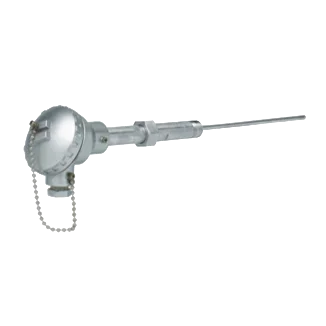
Industrial Thermocouple Sensors Manufacturer/Supplier in Gujarat, India
A trusted thermocouples manufacturer and supplier in India provides reliable temperature sensing solutions for industrial applications requiring wide temperature range measurement, fast response, and durability in harsh environments. Thermocouples are among the most widely used temperature sensors in process industries due to their rugged construction, cost-effectiveness, and ability to operate in extreme conditions.
From high-temperature furnaces to chemical processing units, thermocouples play a critical role in ensuring accurate temperature monitoring, process efficiency, and operational safety.
What are Thermocouples?
A thermocouple is a temperature sensor consisting of two dissimilar metal wires joined at one end, forming a junction that generates a voltage when exposed to temperature differences. Seebeck effect is the fundamental principle behind its operation, where a temperature difference between two junctions produces an electromotive force proportional to temperature.
They are commonly used for:
- High-temperature measurement
- Industrial process monitoring
- Integration with control systems
How Thermocouples Work
Thermocouples operate based on the temperature difference between the hot junction (measurement point) and the cold junction (reference point). This temperature difference generates a small voltage, which is measured and converted into temperature readings.
Unlike other sensors, thermocouples directly convert thermal energy into electrical signals, making them highly suitable for industrial automation and real-time monitoring.
Why Thermocouples are Widely Used in Industry
Thermocouples are preferred in industrial applications due to:
- Wide temperature range capability (up to ~1800°C depending on type)
- Fast response time for real-time measurement
- Rugged construction for harsh environments
- Cost-effective compared to other sensors
- Compatibility with automation systems (PLC, SCADA)
- Reliable performance in vibration and high-pressure conditions
Without the Right Thermocouple
Using an incorrect or low-quality thermocouple can result in:
- Inaccurate temperature readings
- Equipment damage due to overheating
- Process inefficiency and instability
- Frequent sensor failure in harsh conditions
- Increased maintenance and downtime
- Safety risks in high-temperature environments
Proper thermocouple selection ensures reliable and accurate temperature monitoring.
Types of Thermocouples
Type K Thermocouple
The most widely used thermocouple type, offering a wide temperature range and excellent durability, is suitable for general industrial applications.
Type J Thermocouple
Used in moderate temperature applications, especially in industrial machinery and processing systems.
Type T Thermocouple
Suitable for low-temperature applications and environments requiring high accuracy at lower ranges.
Type E Thermocouple
Provides high output voltage and good accuracy, often used in laboratory and precision applications.
Type R, S, and B Thermocouples
Made from platinum-based alloys, these are used in extremely high-temperature applications such as furnaces and metal processing industries.
Key Features of Industrial Thermocouples
- Wide temperature measurement range
- Fast response time
- Durable and vibration-resistant design
- Suitable for extreme environments
- Simple construction and easy installation
- Compatible with control and monitoring systems
Applications of Thermocouples
Oil & Gas: Refinery processes, pipelines, and drilling operations
Chemical & Petrochemical: Reactor temperature monitoring and process control
Power Generation: Boilers, turbines, and heat exchangers
Metal & Foundry: Furnace temperature monitoring and molten metal measurement
Food & Beverage: Temperature monitoring in ovens and processing systems
HVAC Systems: Heating and cooling system control
Industrial Automation: Integration with PLC, SCADA, and control systems
How to Select the Right Thermocouple
Selecting the correct thermocouple depends on:
- Temperature range requirements
- Type of application and environment
- Required accuracy and response time
- Material compatibility with process media
- Installation method and protection (thermowell)
- Output and integration requirements
Choosing the right thermocouple ensures optimal performance and durability.
Frequently Asked Questions
Q: What is a thermocouple used for?
Thermocouples are used for measuring temperature in industrial processes, especially in high-temperature and harsh environments.
Q: Why are thermocouples widely used?
They are durable, cost-effective, and capable of measuring a wide temperature range.
Q: What is the temperature range of thermocouples?
Depending on type, thermocouples can measure from -200°C up to 1800°C or more.
Q: What is the difference between a thermocouple and an RTD?
Thermocouples are better for high temperatures, while RTDs offer higher accuracy at lower ranges.
Q: Where are thermocouples used?
They are used in industries such as oil & gas, chemical, power plants, and manufacturing.
Advantages of Using Thermocouples
- Wide temperature measurement capability
- Fast and responsive performance
- Durable and reliable in harsh environments
- Cost-effective solution
- Easy integration with control systems
- Suitable for a wide range of industrial applications
Why Choose a Specialist Thermocouple Manufacturer & Supplier in Gujarat, India
- Wide range of thermocouples, including Type K, J, T, E, and platinum types for diverse industrial applications
- High-quality materials and robust construction are suitable for extreme temperatures and harsh process environments
- Custom design and fabrication options, including probe length, sheath material, and mounting configurations
- Strict quality testing and calibration procedures to ensure accuracy and long-term reliability
- Compliance with industrial standards and specifications for safe and consistent performance
- Competitive pricing supported by Indian manufacturing capabilities without compromising quality
- Fast delivery timelines with efficient production and inventory management
- Strong technical support and application guidance for correct selection and installation
- Trusted by OEMs, EPC contractors, and process industries