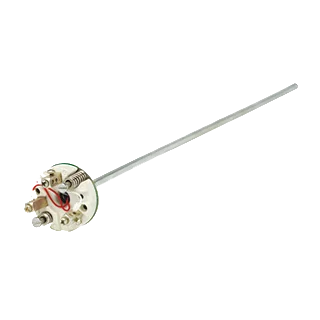
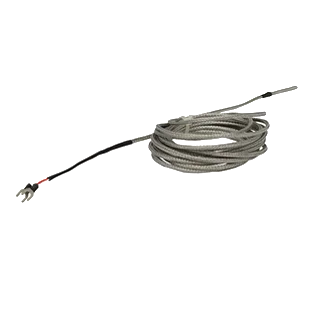
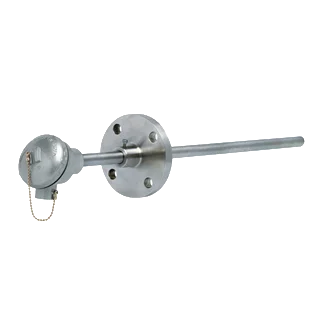
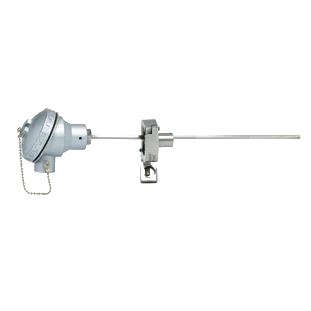
Resistance Temperature Detector (RTD) Manufacturer/Supplier in Gujarat, India
A trusted manufacturer and supplier of precision RTD sensors in India, we engineer temperature measurement instruments designed for accuracy, stability, and reliability across industrial processes where thermal control directly impacts safety, quality, and operational efficiency. Resistance Temperature Detectors are fundamental components in power generation, petrochemical refining, pharmaceutical manufacturing, and HVAC systems, where continuous, accurate temperature monitoring prevents process deviations, protects equipment from thermal damage, and ensures regulatory compliance. Our RTD solutions serve manufacturing facilities, energy plants, and automation integrators who demand sensors that deliver consistent performance in demanding thermal environments.
What is a Resistance Temperature Detector (RTD)?
A Resistance Temperature Detector (RTD) is a temperature sensor that measures heat by exploiting the predictable change in electrical resistance of pure metals as temperature changes. RTDs contain a thin metal resistor (typically platinum) that increases in resistance proportionally as temperature rises, allowing accurate temperature determination by measuring this resistance change. Unlike thermocouples, which generate voltage, RTDs measure resistance directly, providing superior accuracy and repeatability.
RTD sensors convert thermal energy into measurable electrical signals that control heating systems, trigger alarms, and provide real-time temperature feedback to process automation systems.
Common RTD Applications:
- Continuous process temperature monitoring in reactors and distillation columns
- Equipment protection and overheat prevention in motors, compressors, and transformers
- Temperature feedback loops in HVAC and cooling systems
- Regulatory compliance documentation in pharmaceutical and food manufacturing
How RTD Sensors Work
RTDs operate on the fundamental principle that electrical resistance increases linearly with temperature in pure metals. A platinum wire or thin film (the sensing element) is encased in a protective sheath and exposed to the process environment. As temperature increases, electrons move more freely through the metal lattice, causing resistance to increase predictably according to the Callendar-Van Dusen equation.
Platinum RTDs (Pt100 and Pt1000) are industry standards: Pt100 has 100 ohms resistance at 0°C, while Pt1000 has 1000 ohms at the same temperature. Higher resistance elements (Pt1000) are more sensitive but less tolerant of lead resistance errors.
Connection Methods affect accuracy:
- 2-Wire RTDs: Simplest, cheapest; subject to lead wire resistance errors, acceptable for short distances only
- 3-Wire RTDs: Compensates for one lead resistance; standard in industrial applications
- 4-Wire RTDs: Eliminates lead resistance error; delivers the highest accuracy; preferred for critical measurements
Why RTDs are Preferred for Industrial Applications
- Superior Accuracy & Repeatability: RTDs deliver ±0.1°C to ±0.5°C accuracy, outperforming thermocouples and thermistors. Repeatability within ±0.05°C ensures consistent quality control and regulatory documentation.
- Wide Temperature Range: Operating from −200°C to +850°C, RTDs cover nearly all industrial thermal environments from cryogenic gas systems to furnace monitoring and exhaust stream measurement.
- Linear Temperature Response: Resistance changes proportionally with temperature, simplifying signal conditioning and eliminating non-linearity corrections that complicate thermocouple systems.
- Long-Term Stability & Minimal Drift: Platinum’s chemical inertness means RTDs resist calibration drift even after years of operation in harsh environments, reducing recalibration frequency and maintenance costs.
- Digital Integration & Signal Conditioning: RTD resistance is easily converted to standard industrial signals (4-20mA, 0-10V, or digital protocols), enabling seamless integration with PLCs, data loggers, and SCADA systems.
- Robust in Electrically Noisy Environments: RTDs measure resistance rather than voltage, making them immune to electromagnetic interference (EMI) that degrades thermocouple signals in industrial settings with motors, welders, and high-power equipment.
Without the Right RTD Sensor
- Process Temperature Blind Spots: Inaccurate or slow-responding sensors delay problem detection, allowing process temperatures to drift outside specification windows. In pharmaceutical synthesis or food pasteurization, this compromises product sterility and regulatory compliance.
- Equipment Thermal Damage & Unplanned Failures: Lack of reliable overheat protection allows motors, compressors, and transformers to operate beyond safe thermal limits, causing insulation breakdown, bearing seizure, and catastrophic equipment failure with no warning.
- Quality Control Failures & High Scrap Rates: Temperature variations in polymerization, heat treatment, and curing processes directly degrade product properties. Without accurate temperature feedback, batch consistency suffers, and scrap rates climb measurably.
- Regulatory Non-Compliance & Documentation Gaps: Pharmaceutical, food, and chemical industries require continuous temperature monitoring and traceable documentation. Inadequate RTD systems cannot meet FDA, GMP, or ISO 9001 audit requirements.
- Inability to Optimize Process Efficiency: Without real-time temperature intelligence, operators cannot fine-tune heating/cooling setpoints for energy efficiency. Systems operate at fixed parameters regardless of actual load, wasting energy and increasing operational costs by 15–25%.
- Maintenance Becoming Reactive & Costly: Lack of temperature trending prevents early detection of degrading equipment (bearing wear, fouled heat exchangers). Problems escalate into emergency shutdowns, forcing costly overtime repairs and production losses.
Types of Resistance Temperature Detectors
Pt100 RTD Sensor
Standard platinum RTD with 100 ohms resistance at 0°C, covering -50°C to +200°C (standard grade) or -200°C to +850°C (special grade). Pt100 is the global industry standard, offering an ideal balance between cost, accuracy, and sensor response time. Most widely stocked; most applications specify Pt100 by default.
Pt1000 RTD Sensor
Platinum RTD with 1000 ohms resistance at 0°C, offering greater sensitivity and faster thermal response than Pt100. Preferred in applications requiring high precision and rapid temperature changes. Pt1000 is more sensitive to lead wire resistance, demanding a 3-wire or 4-wire connection for accuracy.
Wire-Wound RTD
Constructed by winding a coil of platinum or nickel wire around a ceramic core. Wire-wound RTDs offer excellent accuracy and are available across wide temperature ranges. Larger size and higher cost limit use to laboratory-grade applications and extreme-temperature environments.
Thin-Film RTD
Platinum film deposited on ceramic substrate; compact, fast-responding, cost-effective alternative to wire-wound. Thin-film RTDs are more sensitive to vibration and shock but deliver superior response time (100-500ms). Common in modern industrial temperature controllers and smart sensors.
2-Wire, 3-Wire, and 4-Wire RTD
- 2-Wire: Simplest connection; lead wire resistance introduces 1-2°C error over distance; acceptable for short runs (<10 meters) in non-critical applications.
- 3-Wire: Compensates for one lead resistance; industry standard for distributed temperature monitoring; balances cost and accuracy.
- 4-Wire: Eliminates all lead wire error; delivers the highest accuracy; essential for critical measurements, long distances, and precision process control.
Key Features of Industrial RTD Sensors
- Accuracy Range ±0.1°C to ±1°C: IEC Class A (±0.15°C) and Class B (±0.3°C) certifications ensure measurement reliability for quality and safety-critical processes.
- Interchangeable Design: Standardized dimensions (1/10 DIN, DIN 43760) enable direct replacement without recalibration or system redesign.
- Fast Thermal Response: Response time 10–500ms depending on sheath material and thickness; enables closed-loop temperature control and rapid upset detection.
- Chemical Inertia & Corrosion Resistance: Platinum withstands corrosive gases, acids, and high-temperature oxidation; stainless steel sheaths protect against mechanical and chemical attack.
- Overshoot Protection & Robust Design: Sheath materials (304/316 stainless, Hastelloy, ceramics) survive thermal shock, vibration, and mechanical impact without sensor damage.
- Wide Signal Output Options: Resistance output (standard), 4-20mA transmitter option, digital (RS485, Hart, Modbus), or analog voltage, enabling integration with legacy and modern control systems.
Applications of RTD Sensors
- Oil & Gas Industry: Wellhead temperature monitoring, pipeline outlet temperature control, compressor discharge temperature, and subsea equipment thermal management.
- Power Generation: Turbine inlet/outlet temperature measurement, cooling water circuit monitoring, steam system temperature control, and transformer winding temperature protection.
- Pharmaceutical Manufacturing: Reactor temperature monitoring, autoclave sterilization cycles, freeze-drying process control, and regulatory compliance documentation.
- Petrochemical Refining: Furnace outlet temperature measurement, distillation column reboiler/condenser temperature monitoring, catalyst bed temperature control, and separation vessel temperature feedback.
- Food & Beverage Processing: Pasteurization system temperature validation, sterilization cycle control, freeze-drying and spray-drying process monitoring, and cold chain temperature tracking.
- HVAC Systems: Chilled water supply/return temperature monitoring, boiler outlet temperature control, compressor discharge temperature protection, and multi-zone thermal balancing.
- Industrial Ovens & Heat Treat: Furnace chamber temperature measurement, thermal uniformity verification, quenching temperature control, and tempering process feedback.
- Wastewater Treatment: Anaerobic digester temperature monitoring, thermal desorption process control, and biological treatment process temperature optimization.
How to Select the Right RTD Sensor
Define Temperature Range: Identify minimum and maximum temperatures your process will experience. Select RTD rated 1.5× your maximum for safety margin. Pt100 (-50°C to +200°C) covers 80% of industrial applications; special-grade Pt100 or Pt1000 is required for extreme ranges.
Choose Connection Type: 2-Wire acceptable for short distances (<5 meters); 3-Wire standard for distributed systems; 4-Wire mandatory for critical processes, long distances (>20 meters), or precision requirements.
Specify Sheath Material: 304 stainless for general use; 316L for corrosive/marine environments; Hastelloy for aggressive chemicals; ceramic for ultra-high-temperature or non-metallic applications.
Select Immersion Length: Shallow immersion (25-50mm) for equipment protection; medium (100-150mm) for duct/pipe temperature; deep (300-600mm) for thermal averaging in large vessels or furnace chambers.
Determine Response Time Requirement: Critical control (±1°C tolerance) requires a fast response (10-100ms); process monitoring tolerates a slower response (100-500ms). Thin-film RTDs respond faster than wire-wound.
Verify Compatibility: Ensure RTD output matches your controller input (resistance, 4-20mA, digital protocol). Confirm IP rating for harsh/wet environments. Validate certifications (IEC 61086, NIST-traceable calibration).
Frequently Asked Questions
Q: What is an RTD, and how is it different from a thermocouple?
An RTD is a temperature sensor using platinum resistance change to measure heat; it provides superior accuracy (±0.1°C to ±0.5°C) and stability. Thermocouples generate voltage directly but offer lower accuracy (±1°C to ±2°C) and require cold-junction compensation. RTDs excel in precision process control; thermocouples suit extreme-temperature applications.
Q: Why are RTD sensors more accurate than other temperature sensors?
RTDs measure resistance directly using the predictable, linear relationship between platinum resistance and temperature (Callendar-Van Dusen equation). This direct measurement eliminates the non-linearity and cold-junction errors inherent in thermocouple systems. Additionally, platinum’s chemical inertia resists drift, maintaining calibration accuracy over years of operation.
Q: What temperature range can RTD sensors measure?
Standard-grade Pt100 RTDs measure -50°C to +200°C. Special-grade Pt100 extends to -200°C to +850°C. Pt1000 sensors offer similar ranges but with greater sensitivity and faster response. Selection depends on your specific process temperature requirements and response-time needs.
Q: Where are RTD sensors commonly used in industry?
RTDs are essential in oil & gas monitoring, pharmaceutical reactor control, power plant turbine temperature feedback, petrochemical distillation column monitoring, food processing sterilization validation, HVAC system control, and industrial furnace temperature measurement. Any process requiring accurate, continuous temperature feedback relies on RTD sensors.
Q: What is the difference between a 3-wire and a 4-wire RTD configuration?
3-Wire RTDs compensate for one lead wire resistance; they balance cost and accuracy for industrial applications over moderate distances (<20 meters). 4-Wire RTDs eliminate lead resistance error, delivering the highest accuracy; they are essential for critical processes, long cable runs, and precision control. 4-Wire configuration costs slightly more but prevents temperature measurement errors caused by lead resistance.
Advantages of Using RTD Sensors
Proven Accuracy & Reliability: ±0.1°C to ±0.5°C accuracy ensures consistent quality control, regulatory compliance, and repeatable process outcomes across production batches.
Minimal Calibration Drift: Platinum’s chemical inertness resists aging and degradation. RTDs maintain calibration accuracy for years, reducing recalibration frequency and long-term ownership costs by 40-50%.
Seamless Integration with Modern Controls: RTD resistance converts easily to 4-20mA, 0-10V, or digital signals (RS485, Hart, Modbus), enabling straightforward integration with PLCs, DCS, data loggers, and IoT platforms.
Cost-Effective Long-Term Solution: While initial cost is higher than that of thermistors, RTDs deliver superior durability and accuracy, resulting in lower total cost of ownership through reduced failure rates and maintenance interventions.
Robust Performance in Industrial Environments: RTDs resist electrical noise, vibration, and thermal shock. They operate reliably in motor-control rooms, welding shops, and environments where thermocouple signals become unreliable.
Flexible Design Options: Available as immersion thermometers, surface-mount sensors, cartridge designs, or integrated into transmitters. Stainless, ceramic, or specialty sheaths adapt to any process medium or installation constraint.
Why Choose a Specialist RTD Manufacturer & Supplier in India
- Wide range of RTD sensors and assemblies for multiple industrial applications
- High-quality materials like platinum and SS316 for durability
- Custom design and fabrication as per application needs
- Strict calibration and quality testing standards
- Compliance with industrial norms and certifications
- Competitive pricing with Indian manufacturing advantage
- Fast delivery and reliable technical support
- Trusted by OEMs, EPC contractors, and industries