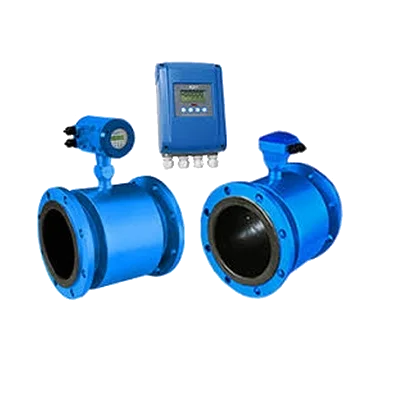
- Size: DN3-DN3000mm (1/8”~120”)
- Accuracy: ±0.5% of reading,velocity >0.3 m/s
- Velocity: 0.1-15 m/s
- Signal Output: 4~20 mA, pulse HART
- Power Supply: AC85~250V, DC20V~36V



When it comes to industrial process automation, selecting the right flow transmitter supplier is critical. A flow transmitter does more than just measure; it converts flow data into standardized electrical signals that drive control systems, data loggers, SCADA platforms, and safety shutdown systems. Choosing a reliable supplier ensures accuracy, uptime, and long-term process integrity.
A flow transmitter is an instrumentation device that measures the flow rate of a liquid, gas, or steam in a pipeline and transmits a corresponding 4-20 mA, HART, Modbus, PROFIBUS, or digital output signal to a control room or automation system.
Unlike a simple flow indicator, a flow transmitter provides a continuous, scalable electrical output that integrates directly with PLCs, DCS systems, and remote monitoring platforms, making it the preferred choice for modern process industries.
The working principle varies by technology, but the core function remains the same:
Differential Pressure (DP) Flow Transmitter: Measures flow by detecting the pressure difference across a primary element such as an orifice plate, venturi, or flow nozzle. Widely used across all industries due to its versatility and proven reliability.
Electromagnetic Flow Transmitter: Uses Faraday’s law of electromagnetic induction to measure the flow of conductive liquids. No moving parts, zero pressure drop, and ideal for water, slurries, chemicals, and food-grade fluids.
Vortex Flow Transmitter: Detects vortices shed by a bluff body in the flow stream. Suitable for steam, gas, and clean liquid applications. Highly accurate with a wide turndown ratio.
Ultrasonic Flow Transmitter: Uses sound waves to measure flow velocity. Available in clamp-on and inline versions. Non-intrusive clamp-on types require no pipe cutting, ideal for retrofitting existing pipelines.
Coriolis Flow Transmitter: Measures mass flow directly by detecting the Coriolis effect on vibrating tubes. The most accurate technology available is used in custody transfer, batching, and high-value fluid measurement.
Thermal Mass Flow Transmitter: Measures gas mass flow based on heat transfer principles. Widely used for compressed air, natural gas, and flare gas measurement.
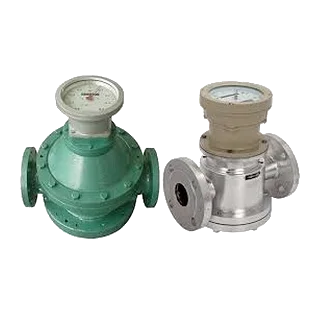
Turbine Flow Transmitter: Uses a rotating turbine wheel to measure volumetric flow. Cost-effective and accurate for clean, low-viscosity liquids and gases.
Flow transmitters are essential across virtually every process industry:
Broad Product Range – Access to DP, electromagnetic, vortex, ultrasonic, Coriolis, and thermal technologies from a single source.
Application Engineering Support – Expert guidance on technology selection, sizing, and installation for your specific fluid, pipe size, and process conditions.
Calibration & Certification – Factory calibration with NABL/traceable calibration certificates for compliance and audit readiness.
Hazardous Area Expertise – Certified ATEX and IECEx products with documentation support for zone classification compliance.
After-Sales Service – Repair, recalibration, spare parts, and on-site technical support to minimize process downtime.
Custom Configurations – Special materials, flange ratings, remote mount electronics, and dual-compartment housings available on request.
Q: What is the difference between a flow meter and a flow transmitter?
A flow meter measures flow and displays it locally. A flow transmitter measures flow and additionally transmits a standardized electrical signal, such as 4-20 mA or HART, to a remote control system or data logger.
Q: Which flow transmitter technology is most accurate?
Coriolis flow transmitters offer the highest accuracy, typically ±0.1% of reading, and measure mass flow directly. They are the preferred choice for custody transfer and high-value fluid applications.
Q: Can a flow transmitter work without a power supply?
Most flow transmitters are loop-powered and operate on the 4-20 mA signal loop itself, requiring only a 12-36V DC supply from the control system. No separate power supply is needed in most cases.
Q: What does the HART protocol mean in a flow transmitter?
HART (Highway Addressable Remote Transducer) is a communication protocol that allows digital data, including diagnostics, configuration, and process variables, to be transmitted over the same two-wire 4-20 mA cable simultaneously.
Q: How often should flow transmitters be calibrated?
For general process applications, annual calibration is standard. For custody transfer or fiscal metering applications, calibration may be required every 3 to 6 months, depending on regulatory requirements.
Q: Can a single flow transmitter measure multiple variables?
Yes. Multivariable flow transmitters, particularly DP and Coriolis types, can simultaneously measure flow rate, temperature, pressure, and density, reducing installation costs and panel wiring.
Q: What is the 4-20 mA signal range used for?
The 4 mA signal represents zero flow (0% of range), and 20 mA represents full-scale flow (100% of range). This live-zero concept also allows wire-break detection; a 0 mA reading immediately indicates a fault condition.
A specialist supplier offers distinct advantages over general instrumentation distributors: