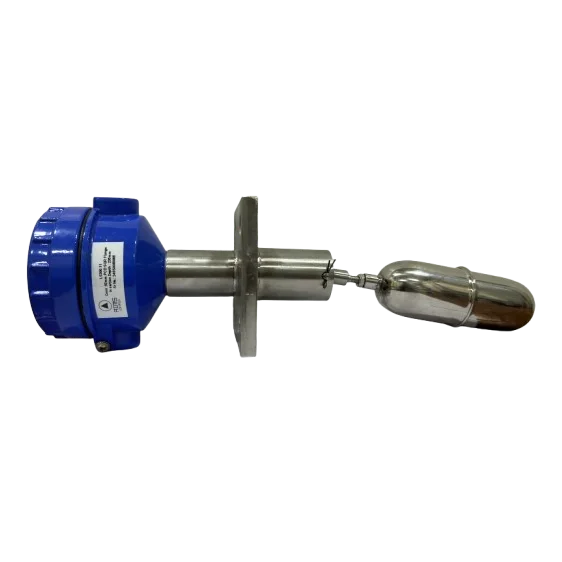
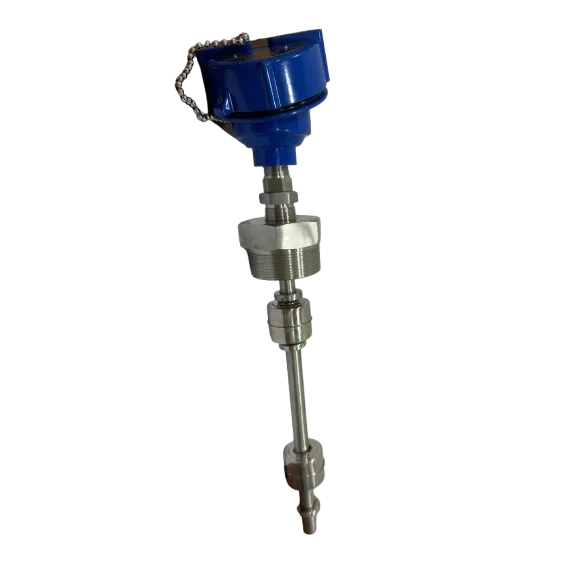
Level Switches Manufacturer & Supplier in Gujarat, India
A trusted level switches manufacturer and supplier provides one of the most critical safety and automation instruments in any process plant. Level switches protect equipment, trigger alarms, automate pump control, and form the backbone of Safety Instrumented Systems, making product quality, reliability, and correct selection essential.
What is a Level Switch?
A level switch is a point level detection instrument that outputs an ON/OFF electrical signal when a liquid, solid, or slurry reaches a specific high or low level inside a tank, vessel, silo, or pipeline. It does not measure the exact level continuously; it simply detects whether the level has reached a defined set point and triggers the appropriate action.
Level switches are used for:
- High-level alarms and overfill protection
- Low-level alarms and dry-run pump protection
- Pump and compressor start/stop automation
- Valve open/close control
- Safety Instrumented System (SIS) and Emergency Shutdown (ESD) inputs
- Conveyor and feeder control in bulk solid handling
Key Features of Quality Level Switches
- Simple and reliable ON/OFF output, easy integration with any PLC, DCS, or relay panel
- SPDT relay, NPN, and PNP transistor output options
- SIL 1 and SIL 2 certified versions for safety-critical and functional safety applications
- Wide wetted material selection, SS316, Hastelloy, PTFE for corrosive and aggressive media
- ATEX and IECEx certified for hazardous area Zone 0, Zone 1, and Zone 2
- IP65, IP67, and IP68 rated enclosures for harsh outdoor and wash-down environments
- Suitable for liquids, bulk solids, powders, granules, and slurries
- Top-mount, side-mount, and insertion mounting configurations available
- Adjustable sensitivity and set point on selected types
- Compact and lightweight design for easy installation in tight spaces
- Low maintenance, most types have no moving parts or minimal mechanical components
- Wide process temperature and pressure ratings across all types
Applications of Level Switches
Oil & Gas: high and low level alarms on separator vessels, storage tanks, offshore platform vessels, flare knockout drums, and fuel oil day tanks.
Chemical & Petrochemical: overfill protection on chemical storage tanks, reactor vessels, and solvent tanks handling aggressive and hazardous media.
Water & Wastewater: pump start/stop control in wet wells, high level alarms on dosing tanks, and low level protection on chemical feed systems.
Power Generation: boiler feed pump protection, condensate tank alarms, fuel oil level switching, and cooling water system monitoring.
Pharmaceuticals: high and low level detection in hygienic vessels, bioreactors, WFI storage tanks, and sterile process equipment.
Food & Beverage: ingredient silo level detection, mixing tank alarms, fermentation vessel control, and CIP solution tank monitoring.
Cement & Mining: bulk solid level detection in limestone silos, coal hoppers, ore storage bins, and crusher feed hoppers.
HVAC & Building Services: cooling tower basin level control, expansion vessel alarms, and chilled water system pump protection.
Marine & Offshore: bilge alarms, ballast tank level switching, and fuel tank high-level protection.
Industries Served
Level switches serve virtually every sector of the process industry, from upstream oil and gas exploration to municipal water treatment, pharmaceutical manufacturing, food production, and power generation. Any application where equipment must be protected from running dry, a vessel must be prevented from overfilling, or a pump must start and stop automatically requires a reliable level switch.
Frequently Asked Questions
Q: What is the most reliable type of level switch for general industrial use?
Tuning fork level switches are widely regarded as the most reliable for general industrial liquid and solid applications due to their self-checking vibration principle, absence of moving parts, and SIL 2 certification capability. Float level switches remain the most widely used due to their simplicity and low cost.
Q: Can level switches be used for bulk solids and powders?
Yes. Rotary paddle switches and tuning fork switches are specifically designed for bulk solid, powder, and granule level detection in silos, hoppers, and storage bins. Material density and particle size must be considered when selecting the right type.
Q: What is the difference between a level switch and a level transmitter?
A level switch outputs a simple ON/OFF signal when the level reaches a set point. A level transmitter provides a continuous 4-20 mA signal representing the exact level at all times. Switches are used for alarms and automation. Transmitters are used for process control and inventory measurement.
Q: How do I select the right level switch for my application?
Key selection parameters include fluid type (liquid, solid, or slurry), process temperature and pressure, vessel size and mounting options, required output signal, and whether hazardous area certification or SIL rating is needed. Always consult a specialist manufacturer for application-specific guidance.
Q: Are level switches suitable for viscous or sticky fluids?
Selected types perform well in viscous media. Tuning fork switches with extended probes and vibration-immune electronics handle sticky fluids effectively. Float switches may not be suitable for highly viscous or coating media. Always specify fluid viscosity and density to the manufacturer for correct product selection.
Why Choose a Specialist Level Switch Manufacturer & Supplier
- Complete range of level switch technologies for liquids, solids, and slurries from a single source
- Independent application engineering support for correct technology and product selection
- SIL 1 and SIL 2 certified products with complete functional safety documentation
- ATEX and IECEx certified instruments for Zone 0, Zone 1, and Zone 2 hazardous areas
- Custom probe lengths, wetted materials, and process connections manufactured to specification
- Full material traceability with test certificates for pressure system compliance
- Fast delivery from stock on standard products
- On-site installation support, commissioning, and after-sales technical service