
Easy & low torque engagement, Leak-free assembly & reassembly, Various patterns & connections, and a wide variety of materials.
- Tube Sizes: From 6 mm to 25 mm or 1/8″ to 1″
- Material: AISI 316 SS, AISI 316L SS, Monel (Others on request)

Easy & low torque engagement, Leak-free assembly & reassembly, Various patterns & connections, and a wide variety of materials.
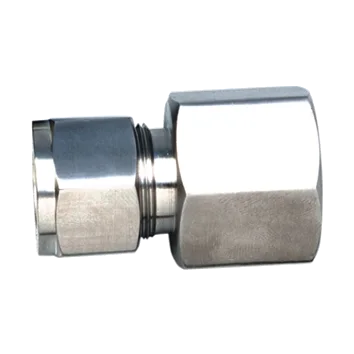
Easy & low torque engagement, Leak-free assembly & reassembly, Various patterns & connections, and a wide variety of materials.

Easy & low torque engagement, Leak-free assembly & reassembly, Various patterns & connections, and a wide variety of materials.
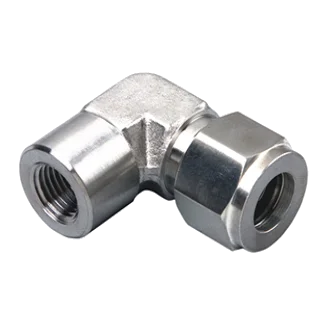
Easy & low torque engagement, Leak-free assembly & reassembly, Various patterns & connections, and a wide variety of materials.

Easy & low torque engagement, Leak-free assembly & reassembly, Various patterns & connections, and a wide variety of materials.

Easy & low torque engagement, Leak-free assembly, and reassembly, Various patterns & connections, and a wide variety of materials.

Easy & low torque engagement, Leak-free assembly & reassembly, Various patterns & connections, and a wide variety of materials.

Easy & low torque engagement, Leak-free assembly & reassembly, Various patterns & connections, and a wide variety of materials.

Easy & low torque engagement, Leak-free assembly & reassembly, Various patterns & connections, and a wide variety of materials.

Easy & low torque engagement, Leak-free assembly & reassembly, Various patterns & connections, and a wide variety of materials.
Selecting the right tube fittings manufacturer and supplier is one of the most important decisions in any fluid or gas system design. Tube fittings are the critical connection points in instrumentation, hydraulic, pneumatic, and process piping systems, and a single substandard fitting can mean leaks, downtime, or catastrophic system failure.
Tube fittings are mechanical components used to connect, terminate, control, or adapt tubing in fluid and gas handling systems. They create leak-tight, pressure-rated joints between tubes, pipes, valves, instruments, and equipment, without welding.
Unlike pipe fittings that connect threaded or flanged pipes, tube fittings grip and seal directly onto the outer diameter of the tube, making them ideal for instrumentation lines, sample systems, hydraulic circuits, and high-purity applications.
A full-range tube fittings supplier will stock and manufacture:
Tube fittings are essential across a broad spectrum of industries:
Oil & Gas: instrument tubing on wellheads, platforms, and refineries where vibration resistance and corrosion resistance are critical.
Chemical & Petrochemical: high-purity and corrosion-resistant fittings for aggressive media in reactors, heat exchangers, and sampling systems.
Power Generation: instrumentation connections on boilers, turbines, condensers, and cooling circuits.
Pharmaceuticals & Biotechnology: electropolished, crevice-free fittings that meet GMP and FDA hygiene requirements for ultra-clean fluid handling.
Food & Beverage: 3-A sanitary certified fittings for CIP and SIP systems in hygienic processing lines.
Semiconductor & Electronics: ultra-high purity (UHP) fittings for chemical delivery systems in chip fabrication.
Hydraulics & Pneumatics: high-pressure tube connections for mobile machinery, presses, and automation equipment.
Marine & Offshore: duplex and super duplex fittings resistant to seawater corrosion and biofouling.
Laboratories & Analytical Instruments: small-bore fittings for gas chromatography, HPLC, and sample conditioning systems.
Aerospace & Defense: precision-machined fittings for fuel, hydraulic, and pneumatic systems in aircraft and defense equipment.
When approaching a tube fitting manufacturer or supplier, consider these parameters:
Complete Product Range: Every fitting type, size, and material from a single source reduces procurement complexity.
Consistent Quality: CNC-machined components with dimensional accuracy and surface finish controlled at the manufacturing stage.
Material Traceability: Full MTRs (Material Test Reports) and heat number traceability for pressure system compliance and audit readiness.
Custom Manufacturing: Special alloys, non-standard sizes, custom thread forms, and OEM-branded fittings manufactured to drawing.
Large Stock Holdings: Fast delivery from warehouse stock on standard SS316 and brass range, critical for maintenance and shutdown scenarios.
Technical Support: Application engineering assistance for pressure calculations, material selection, and system design.
Global Compliance: Products manufactured and tested to international standards for seamless use in export projects worldwide.
Q: What is the difference between a tube fitting and a pipe fitting?
A: A tube fitting connects and seals directly onto the outer diameter of a tube using a ferrule or compression mechanism; no threading of the tube is required. A pipe fitting connects threaded or flanged pipes. Tube fittings are preferred in instrumentation and high-purity systems where leak-tight, dismantlable connections are needed.
Q: What is a double ferrule tube fitting?
A: A double ferrule (twin ferrule) fitting uses two ferrules, a front ferrule that seals against the fitting body and a back ferrule that grips the tube. This design provides superior vibration resistance, pull-out strength, and reliable re-make capability compared to single ferrule designs.
Q: Are compression tube fittings reusable?
A: Yes. Quality compression tube fittings can be disassembled and reassembled multiple times without loss of sealing performance, provided the tube is not damaged and the ferrule is properly re-engaged on reassembly.
Q: What tube materials are compatible with SS316 tube fittings?
A: SS316 fittings are compatible with SS316, SS304, and duplex stainless steel tubing. Always match fitting and tube materials to avoid galvanic corrosion. Avoid using carbon steel tubing with stainless fittings in wet environments.
Q: What is the maximum pressure rating for tube fittings?
A: Pressure ratings vary by material, tube OD, and wall thickness. SS316 compression fittings on small-bore tubing (¼” OD, 0.049″ wall) can be rated up to 5,000–10,000 PSI. Always consult the manufacturer’s pressure-temperature ratings for your specific configuration.
Q: What does electropolished mean for tube fittings?
A: Electropolishing is an electrochemical finishing process that removes surface material to produce an ultra-smooth, highly corrosion-resistant finish. It is essential for semiconductor, pharmaceutical, and ultra-high purity (UHP) applications where surface roughness and particle generation must be minimized.
Q: Do tube fittings require special tools for installation?
A: Standard compression tube fittings require only two spanners for installation. Some manufacturers supply gauging tools and pre-swaging tools to ensure consistent ferrule pre-setting, particularly important for large-bore, high-pressure, or safety-critical applications.
Working with a specialist gives you access to: