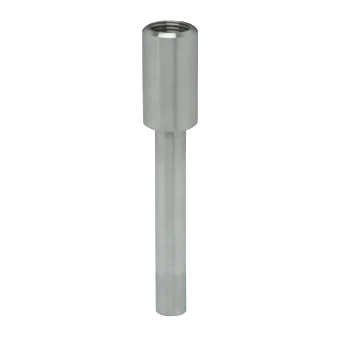
Thermowells Manufacturer/Supplier in India
A trusted thermowells manufacturer and supplier in India, we engineer protective housings designed to shield temperature sensors from harsh process conditions, mechanical damage, and corrosive media while enabling safe sensor replacement without system shutdown. Thermowells are critical infrastructure protecting RTDs, thermocouples, and industrial thermometers across petrochemical refineries, power generation plants, chemical processing facilities, and HVAC systems. By isolating sensors from direct process contact, thermowells extend sensor lifespan, prevent costly measurement failures, and enable maintenance operations without production interruption. Our thermowell solutions serve process automation engineers, facility managers, and OEM integrators who demand reliable temperature instrument protection across demanding industrial environments.
What are Thermowells?
A thermowell is a protective metal tube, typically manufactured from stainless steel or specialized alloys, that houses and protects temperature sensors (RTDs, thermocouples, or glass thermometers) from direct exposure to harsh process conditions. The thermowell is inserted into the process stream or vessel, with the sensor mounted internally, creating a physical barrier between the sensor and the process fluid while enabling accurate heat transfer and temperature measurement.
Thermowells serve as sacrificial protective barriers that absorb mechanical shock, corrosive attack, thermal cycling, and process turbulence, preserving sensor integrity and measurement accuracy over extended service life.
Core Thermowell Functions:
- Sensor protection from corrosive, abrasive, or erosive process media
- Isolation from mechanical vibration, pulsating flow, and thermal shock
- Hot-swap capability enabling sensor replacement during equipment operation without process shutdown
How Thermowells Work
Thermowells function through conductive heat transfer, where process heat penetrates the thermowell walls and transfers to the internal sensor element. Heat flows from the high-temperature process stream, through the thermowell metal (which conducts heat efficiently), to the sensor bulb where temperature measurement occurs. The thermowell material (typically stainless steel with high thermal conductivity) ensures minimal measurement lag while the protective barrier shields the sensor from direct process contact.
The sealed thermowell design isolates the sensor from corrosive vapors, chemical splashing, and erosive particles, preventing degradation while maintaining thermal responsiveness. This isolation extends sensor lifespan from months (unprotected sensors) to years (properly installed in thermowells).
Why Thermowells are Essential in Industrial Applications
- Sensor Protection & Extended Lifespan: Thermowells shield sensors from corrosive chemicals, abrasive slurries, and erosive high-velocity flow. Unprotected sensors degrade rapidly; thermowells extend service life 300–500%, deferring replacement costs.
- Safe Sensor Replacement Without Shutdown: Thermowells feature removable sensors or hot-tap designs enabling replacement during equipment operation. Without thermowells, sensor replacement requires a full system shutdown, costing thousands in lost production.
- Accurate Measurement & Process Control: Direct sensor exposure to process media causes measurement drift, fouling, and sensor destruction. Thermowells maintain measurement stability, enabling consistent process control and quality assurance.
- Mechanical Vibration & Shock Isolation: High-velocity flow and pulsating pressure cause sensor stress and accelerated failure. Thermowell materials absorb vibration energy, protecting delicate sensors in turbulent flow environments.
- Regulatory Compliance & Documented Safety: Pressure equipment directives (PED) and process safety management standards mandate sensor protection devices. Thermowells demonstrate the equipment protection capability required for regulatory certification.
- Prevents Catastrophic Sensor Failure: Unprotected sensors failing without warning create blind spots in process monitoring, risking equipment damage or unsafe conditions. Thermowells prevent sudden measurement loss through deliberate, predictable sensor protection.
Without the Right Thermowell
- Rapid Sensor Degradation & Frequent Replacement: Unprotected sensors exposed to corrosive or abrasive media fail within months, requiring constant replacement and creating recurring maintenance costs and production disruptions.
- Measurement Drift & Process Control Failure: Direct exposure to harsh processes causes fouling, coating, and sensor poisoning. Measurement becomes unreliable, preventing accurate process control and enabling dangerous conditions to develop undetected.
- Unplanned Production Shutdowns: When sensors fail without warning, equipment stops, requiring emergency replacement during operation. Emergency repairs consume operator time, delay production, and increase safety risks from rushed work.
- Personnel Safety Hazards: Unprotected sensors in high-temperature or high-pressure systems create burn and injury risks during replacement. Sensor replacement without thermowell protection exposes personnel to dangerous conditions.
- Equipment Damage & Operational Loss: Lack of reliable temperature monitoring in critical processes enables dangerous thermal runaway, equipment overheat, or process instability. Temperature blind spots prevent protective shutdowns from triggering automatically.
- Compliance & Certification Challenges: Systems lacking proper sensor protection cannot demonstrate compliance with pressure equipment directives or process safety standards, risking regulatory penalties and production shutdowns.
Types of Thermowells
Threaded Thermowell
Features an NPT or ISO pipe thread connection for installation into threaded ports on equipment or piping. Threaded thermowells are the simplest to install, requiring only a thread-mounted connection. Ideal for small-diameter process lines, retrofits, and installations where welding is impractical or prohibited.
Flanged Thermowell
Connects via flange bolting to equipment or pipe flanges, enabling installation on high-pressure or high-temperature systems. Flanged thermowells provide a permanent, vibration-resistant connection suitable for critical process vessels and severe service applications. Enables easy removal for maintenance.
Welded Thermowell
Permanently welded directly into piping or equipment walls, providing the most secure, leak-proof installation for critical high-temperature and high-pressure systems. Welded thermowells eliminate potential leak points and are preferred in hazardous service or extreme-pressure applications.
Socket Weld Thermowell
Features a socket-weld connection for integration into carbon steel piping systems. Socket-weld thermowells provide strong, leak-free connections in power generation, petrochemical, and industrial steam systems. Suitable for small-diameter lines where threaded or flanged connections are impractical.
Thermowell Stem Types
Straight Thermowell
Cylindrical thermowell with uniform diameter throughout its length. Straight thermowells offer maximum sensor insertion depth and are used when the sensor must be positioned deep within the process stream for accurate measurement or thermal averaging. Standard design suitable for most applications.
Stepped Thermowell
Features a transition from a larger outer diameter (shock-absorbing section) to a smaller inner diameter (sensor mounting section). Stepped thermowells reduce weight, improve thermal response, and provide enhanced mechanical protection against vibration and erosion in high-velocity flow environments.
Tapered Thermowell
Gradual diameter reduction from base to tip, optimizing flow dynamics and minimizing measurement lag. Tapered thermowells reduce turbulence, lower pressure drop across the sensor assembly, and improve measurement responsiveness in dynamic thermal environments. Premium design for precision applications.
Key Features of Industrial Thermowells
- High-Grade Materials: Stainless steel 304/316L, Hastelloy, duplex stainless for corrosion resistance across acids, alkalis, salts, and aggressive chemical environments.
- Pressure & Temperature Rated: Certified for operating pressures to 400 bar and temperatures to 600°C. All thermowells undergo pressure testing (1.5× operating pressure) to verify integrity before shipment.
- Rapid Thermal Response: Optimized wall thickness (typically 1.5–3mm) balances sensor protection with fast heat transfer. Response time typically 10–30 seconds, depending on design and process conditions.
- Customizable Insertion Length: Available from 25mm to 600mm insertion depth, accommodating shallow immersion (equipment protection) to deep submersion (thermal averaging in large vessels).
- Multiple Connection Options: Threaded, flanged, welded, and socket-weld connections enable installation flexibility across diverse equipment and piping configurations.
- Removable Sensor Design: Most industrial thermowells feature removable sensor cartridges, enabling sensor replacement without system shutdown or process interruption.
Applications of Thermowells
- Oil & Gas Industry: Wellhead temperature monitoring, pipeline outlet sensors, compressor discharge protection, heat exchanger monitoring in crude oil processing and natural gas compression facilities.
- Chemical & Petrochemical Plants: Reactor temperature measurement, distillation column reboiler/condenser monitoring, heat exchanger protection, and hazardous chemical process monitoring.
- Power Generation: Steam system temperature measurement, cooling water circuit monitoring, turbine inlet/outlet sensors, and fossil/nuclear plant process instrumentation.
- Pharmaceutical Manufacturing: Reactor temperature monitoring, autoclave sterilization cycles, freeze-drying process control, and batch reactor temperature feedback in GMP-regulated facilities.
- Food & Beverage Processing: Pasteurization system temperature verification, sterilization cycle monitoring, chilling/heating process control, and cold-chain temperature maintenance.
- HVAC & Building Systems: Boiler outlet temperature sensors, chilled water circuit monitoring, compressor discharge protection, and multi-zone heating/cooling feedback.
- Water & Wastewater Treatment: Thermal process monitoring, anaerobic digester temperature control, thermal disinfection systems, and multi-stage treatment facility instrumentation.
How to Select the Right Thermowell
- Determine Material Compatibility: Identify the process fluid (water, oil, corrosive chemicals, steam). Select thermowell material accordingly: 304/316L stainless for general use, Hastelloy for aggressive chemicals, duplex for chloride environments, ceramic for ultra-corrosive applications.
- Specify Operating Pressure & Temperature: Define the maximum pressure and temperature your system experiences. Select thermowells rated 1.5× your maximum operating pressure for a safety margin. Confirm the temperature rating exceeds your maximum process temperature.
- Evaluate Flow Velocity & Installation Orientation: High-velocity flow (>2 m/s) increases vibration and erosion risk. Specify tapered or stepped thermowells for flow optimization. Horizontal installations require L-shaped bends; vertical installations use straight designs.
- Choose Connection Type: Threaded connections suit retrofits and small piping; flanged connections suit high-pressure/high-temperature systems; welded connections provide maximum security in critical applications.
- Define Insertion Length: Shallow immersion (25–50mm) for equipment protection; medium (100–150mm) for duct/pipe sensors; deep (300–600mm) for thermal averaging in large vessels. Longer insertion improves measurement accuracy but increases pressure drop.
- Verify Thermal Response Requirements: Critical control applications (<±1°C tolerance) require fast response (10–20 seconds); monitoring applications tolerate slower response (20–40 seconds). Select design (straight vs tapered) accordingly.
Frequently Asked Questions
Q: What is a thermowell, and why is it necessary?
A: A thermowell is a protective metal tube housing temperature sensors inside equipment or piping. It shields sensors from corrosive, erosive, or abrasive process conditions while enabling hot-swap sensor replacement without system shutdown. Thermowells extend sensor life 300–500% and prevent costly measurement failures.
Q: Why is a thermowell used instead of inserting a sensor directly into the process?
A: Direct sensor exposure to harsh process media causes rapid degradation, fouling, corrosion, and mechanical damage requiring frequent replacement. Thermowells protect sensors, extending their lifespan significantly. Additionally, thermowells enable sensor replacement during equipment operation, preventing production shutdowns.
Q: Can sensors be replaced without shutting down the process if using a thermowell?
A: Yes. Most thermowells feature removable sensors or hot-tap designs enabling replacement while the equipment operates. Without thermowells, sensor replacement requires a full system shutdown, costing thousands in lost production. Thermowells enable maintenance continuity.
Q: What materials are thermowells made from, and how do I select the right one?
A: Thermowells are manufactured from stainless steel (304/316L), Hastelloy, duplex stainless, or ceramic, depending on corrosion resistance requirements. Select materials based on your specific process fluid, general industrial uses 304/316L; aggressive chemicals require Hastelloy; high-chloride environments require duplex.
Q: What is the difference between threaded and flanged thermowells?
A: Threaded thermowells connect via pipe threads (simplest installation, suitable for small piping and retrofits). Flanged thermowells bolt to equipment flanges, providing a permanent, secure connection ideal for high-pressure or high-temperature systems. Flanged connections eliminate potential leak points.
Advantages of Using Thermowells
- Sensor Protection & Longevity: Extended service life prevents frequent replacement costs and recurring maintenance disruptions.
- Operational Continuity: Hot-swap sensor capability enables maintenance without production shutdown, eliminating costly downtime.
- Measurement Reliability: Protected sensors maintain accuracy and stability, enabling consistent process control and quality assurance.
- Safety Compliance: Demonstrates sensor protection capability required by pressure equipment directives and process safety standards.
- Vibration & Erosion Resistance: Thermowell materials absorb mechanical stress, protecting delicate sensors in turbulent environments.
- Cost Reduction Over Time: While the initial thermowell cost exceeds direct sensor installation, prevention of repeated sensor failures delivers exceptional ROI.
Why Choose a Specialist Thermowell Manufacturer & Supplier in India
- ISO 9001:2015 certified manufacturing with rigorous quality control, pressure testing protocols, and full material traceability
- 25+ years of temperature instrumentation engineering experience across petrochemical, power, pharmaceutical, and food industries
- Complete product range including threaded, flanged, welded, and socket-weld thermowells in SS, Hastelloy, and duplex materials
- Wide operating capability covering temperatures from −50°C to +600°C and pressure ratings up to 400 bar
- Customization and OEM support with non-standard dimensions, special materials, and application-specific configurations
- Competitive pricing advantage with efficient Indian manufacturing and cost-effective supply chain
- Fast delivery with ready stock availability and short lead times for custom-built thermowells
- Dedicated technical support, including selection guidance, installation planning, and material compatibility consultation
- Compliance with Indian and international standards, including IS, ISO, ASME, PED, and NACE requirements
- Proven track record with trusted supply to automotive, petrochemical, pharmaceutical, power, and food industries